
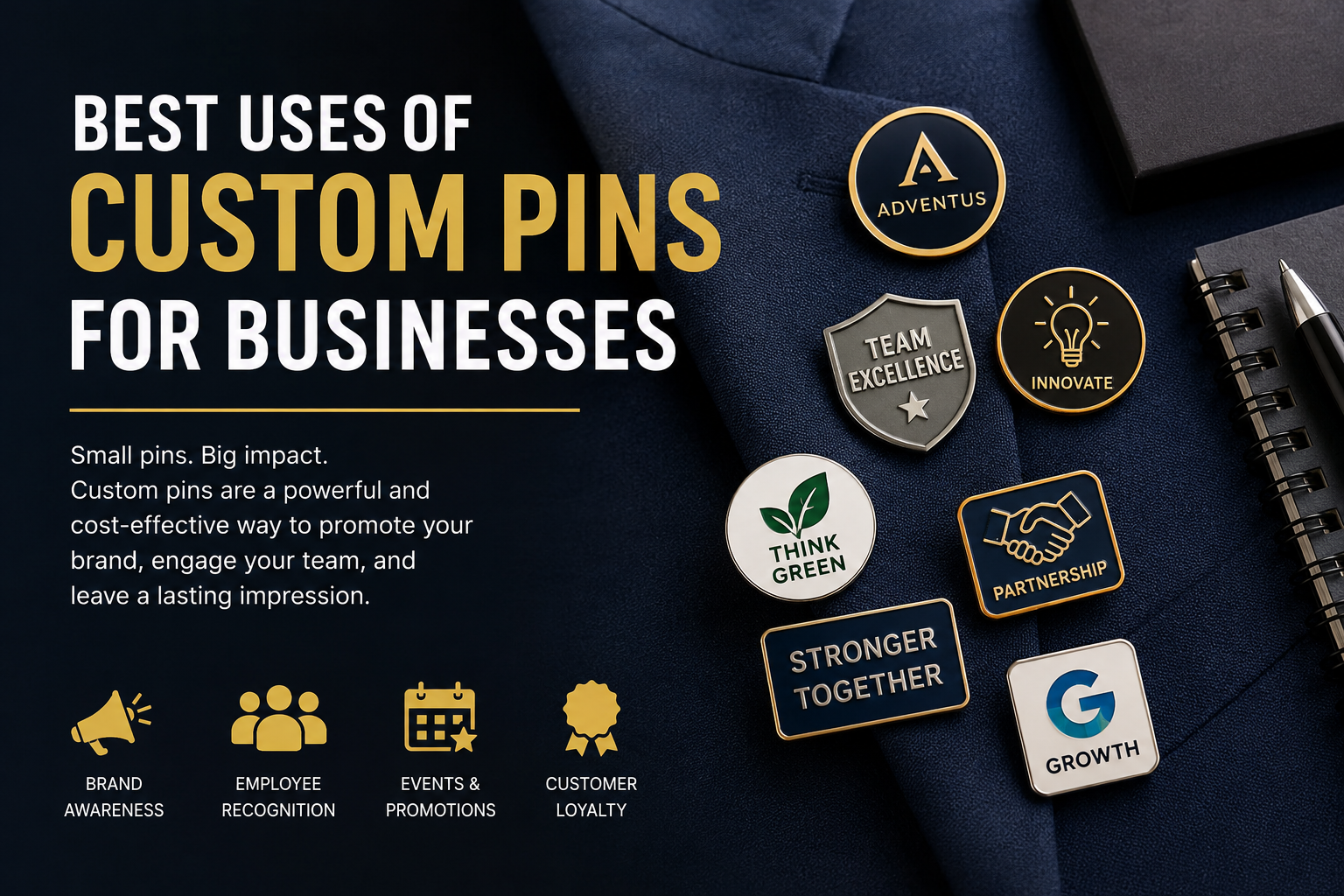
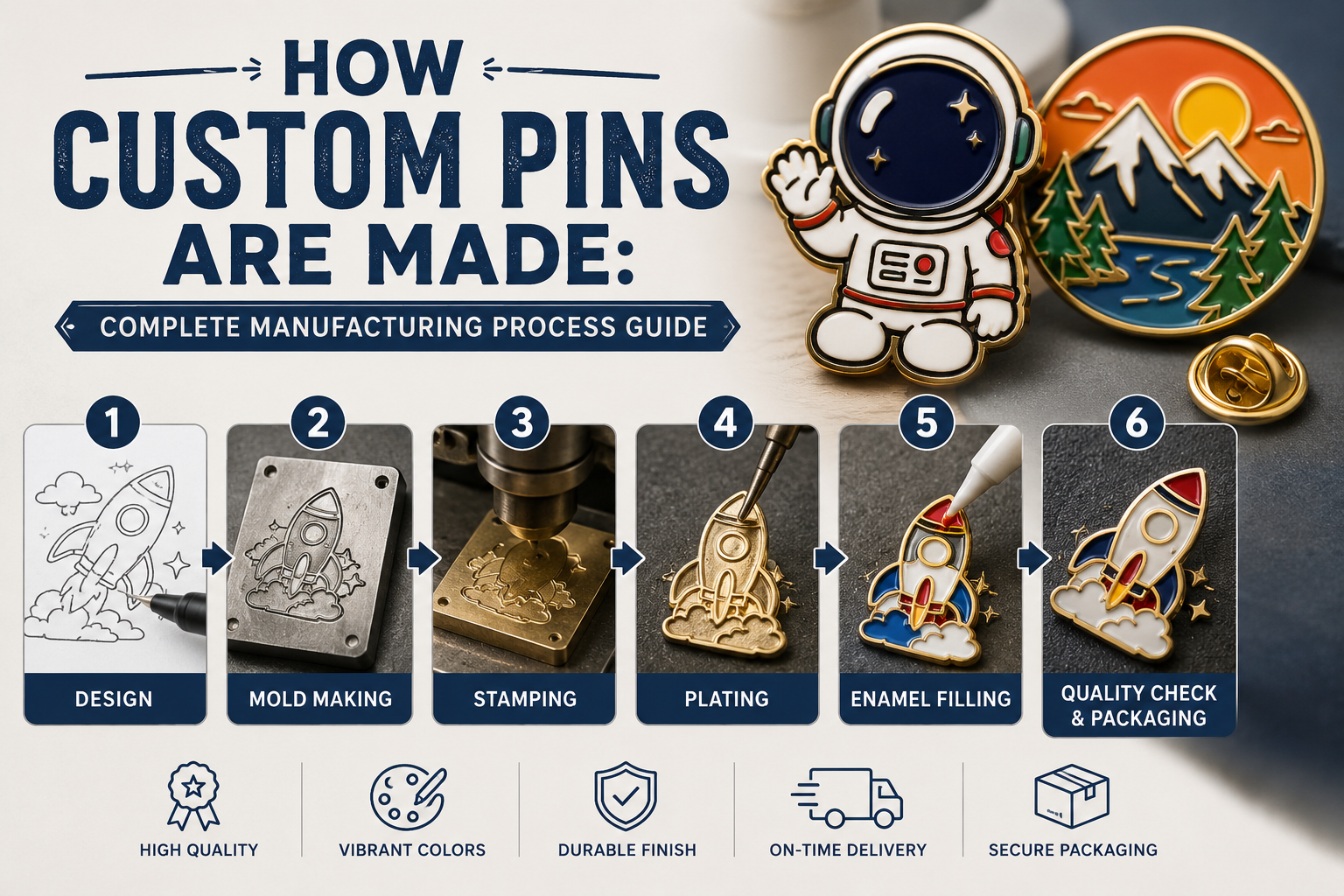
Custom pins have become one of the most popular branding tools for businesses, events, fashion brands, schools, and collectors. Among the most commonly used types are soft enamel pins and hard enamel pins. While they may look similar at first glance, the differences between them significantly impact their appearance, durability, cost, and use cases.
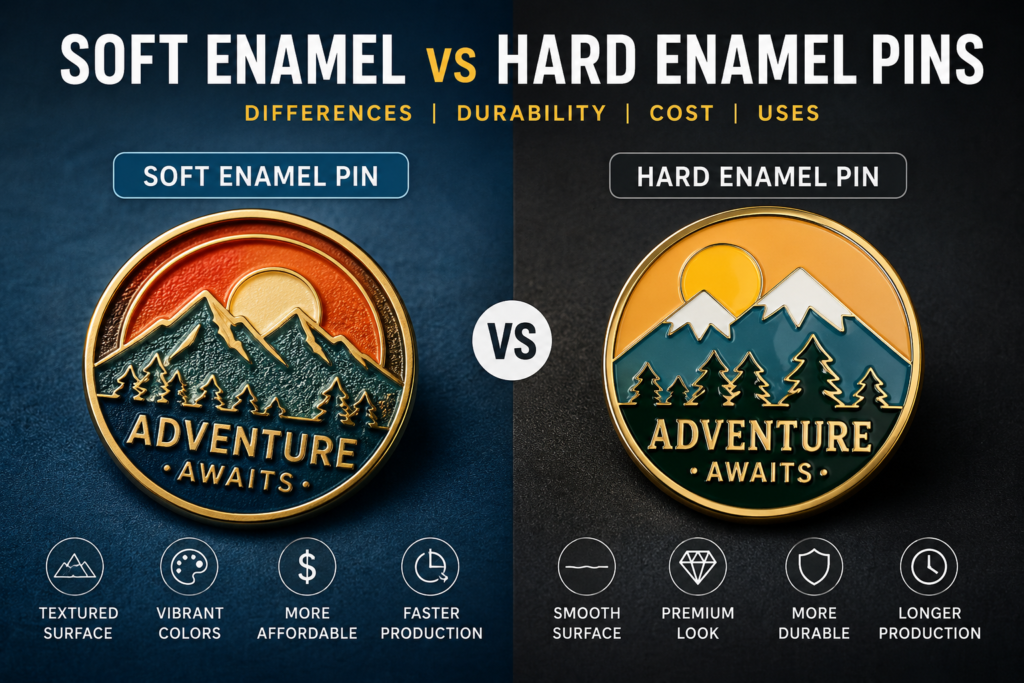
In this detailed guide, we will break down soft enamel vs hard enamel pins, so you can confidently choose the right option for your brand or project. This article is also optimized for users searching for custom lapel pins, enamel pin types, promotional pins, and branded badges, helping you understand everything in one place.
What Are Enamel Pins?
Before comparing both types, it’s important to understand what enamel pins actually are.
Enamel pins are small decorative pins made from metal and filled with colored enamel paint. They are commonly used for branding, fashion accessories, corporate giveaways, and collectible merchandise.
The two main types are:
- Soft enamel pins
- Hard enamel pins
Both are created using similar base materials, but the finishing process is different, which changes their texture, look, and durability.
If you are planning to explore more about custom branding tools, you can also check guides on custom lapel pins for branding
Soft Enamel Pins: What They Are and How They Look
Soft enamel pins are the most popular and widely used type of enamel pins. They are known for their textured surface and vibrant color depth.
In soft enamel production, the colored enamel is added into recessed areas of the metal mold. The enamel does not fully level with the metal lines, which creates a slightly raised and textured feel.
Key Characteristics of Soft Enamel Pins
Soft enamel pins have a distinctive look where you can physically feel the metal edges and color layers. This makes them visually bold and tactile.
They are often used for:
- Promotional branding
- Event merchandise
- Fan collectibles
- Affordable marketing campaigns
Soft enamel pins are especially popular in industries where cost-effective customization is important, such as startups, schools, and small businesses.
From an SEO perspective, this type is commonly searched under keywords like cheap custom pins, soft enamel badges, and bulk lapel pins.
Hard Enamel Pins: What They Are and How They Differ
Hard enamel pins, also known as cloisonné pins, are considered a premium version of enamel pins. They are designed for a smooth, polished, jewelry-like finish.
In hard enamel production, each layer of enamel is filled and then polished flat so that the surface becomes completely smooth and level with the metal lines.
Key Characteristics of Hard Enamel Pins
Hard enamel pins are:
- Smooth to touch
- Highly durable
- Polished and professional-looking
- Resistant to scratches and fading
Because of their refined finish, they are often used by luxury brands, corporate identity programs, and high-end merchandise collections.
Common search terms include premium enamel pins, custom hard enamel badges, and luxury lapel pins.
If you are building a brand identity strategy, hard enamel pins often align with high-end corporate branding materials and professional identity systems (internal linking opportunity).
Soft Enamel vs Hard Enamel Pins: Key Differences Explained
Understanding the difference between soft enamel and hard enamel pins helps you make the right decision based on your budget, purpose, and brand identity.
1. Texture and Surface Finish
Soft enamel pins have a textured surface where you can feel the raised metal outlines and recessed color areas. This gives them a bold and dimensional appearance.
Hard enamel pins, on the other hand, are completely smooth. The enamel is polished flat with the metal, creating a sleek and premium finish.
If your design needs depth and texture, soft enamel is ideal. If you want a clean and elegant look, hard enamel is the better option.
2. Durability and Longevity
Hard enamel pins are more durable because the surface is polished and hardened, making them resistant to scratches and wear.
Soft enamel pins are slightly less durable since the recessed areas can collect dust or experience wear over time, especially with heavy use.
For long-term branding or corporate giveaways, hard enamel is often preferred.
3. Cost Comparison
Soft enamel pins are more affordable and budget-friendly. They are ideal for bulk orders and promotional campaigns where cost efficiency matters.
Hard enamel pins are more expensive due to the additional polishing and production steps involved.
If you are working on a limited budget or large quantity order, soft enamel is usually the practical choice.
4. Visual Appeal and Branding Impact
Soft enamel pins offer a bold and colorful appearance, making them perfect for creative designs, logos, and artistic branding.
Hard enamel pins deliver a premium, professional look, making them suitable for corporate identity, luxury branding, and official merchandise.
Your choice should depend on how you want your audience to perceive your brand.
5. Production Time
Soft enamel pins generally take less time to produce because they skip the polishing stage.
Hard enamel pins require additional polishing and finishing, which increases production time slightly.
For urgent marketing campaigns or event deadlines, soft enamel may be more suitable.
Which One Should You Choose?
Choosing between soft enamel vs hard enamel pins depends on your goal:
If your priority is affordability, bold design, and mass production, soft enamel pins are the right choice.
If your focus is premium branding, durability, and a polished finish, hard enamel pins are the better investment.
Many businesses also use both types strategically—soft enamel for promotional giveaways and hard enamel for VIP branding or corporate identity.
Use Cases in Branding and Marketing
Enamel pins are not just accessories; they are powerful marketing tools. Businesses use them for:
- Corporate branding campaigns
- Product merchandise
- Employee recognition gifts
- Event giveaways and conferences
- Fashion and lifestyle branding
If you are exploring broader marketing strategies, you can also connect this topic with promotional product marketing or brand identity development services (internal linking opportunity).
SEO Insight: Why Enamel Pins Are Trending
Search demand for custom pins has increased globally due to the rise of:
- Small business branding
- E-commerce merchandise stores
- Influencer branding products
- Event-based marketing campaigns
Keywords like custom lapel pins, enamel pin manufacturing, and branded badges UAE are growing in search volume, making this niche highly valuable for SEO and lead generation.
If you run a printing or merchandise website, targeting these keywords can help improve organic visibility and attract high-intent buyers.
Final Verdict: Soft Enamel vs Hard Enamel Pins
Both soft enamel and hard enamel pins offer unique advantages. There is no universal “best” option—only the best option for your specific needs.
Soft enamel pins are ideal when you want:
- Affordable production
- Bold, textured designs
- Bulk promotional use
Hard enamel pins are ideal when you want:
- Premium, smooth finish
- Long-lasting durability
- High-end branding impact
Understanding this difference helps you create better marketing materials, improve brand perception, and make smarter production decisions.
Conclusion
The debate between soft enamel vs hard enamel pins comes down to purpose, budget, and branding strategy. Whether you are a business owner, designer, or marketer, choosing the right type of pin can significantly affect how your audience perceives your brand.
If you are planning to explore custom pin production or integrate it into your branding strategy, make sure to align your choice with your overall marketing goals.
FAQ
Soft enamel pins have a textured surface where you can feel the metal outlines and recessed colors. Hard enamel pins are polished flat, giving a smooth, premium, and jewelry-like finish.
Neither is universally better. Soft enamel pins are ideal for budget-friendly, bold, and colorful designs, while hard enamel pins are better for premium branding, durability, and a polished look.
Yes, soft enamel pins are generally more affordable because they require fewer finishing steps. Hard enamel pins cost more due to extra polishing and production time.
Hard enamel pins usually last longer because their surface is smooth, hardened, and more resistant to scratches and wear compared to soft enamel pins.
Yes, both are widely used for branding. Soft enamel pins are often used for promotional campaigns, while hard enamel pins are preferred for corporate identity and premium merchandise. You can also explore more about custom lapel pins for branding (internal linking opportunity).