
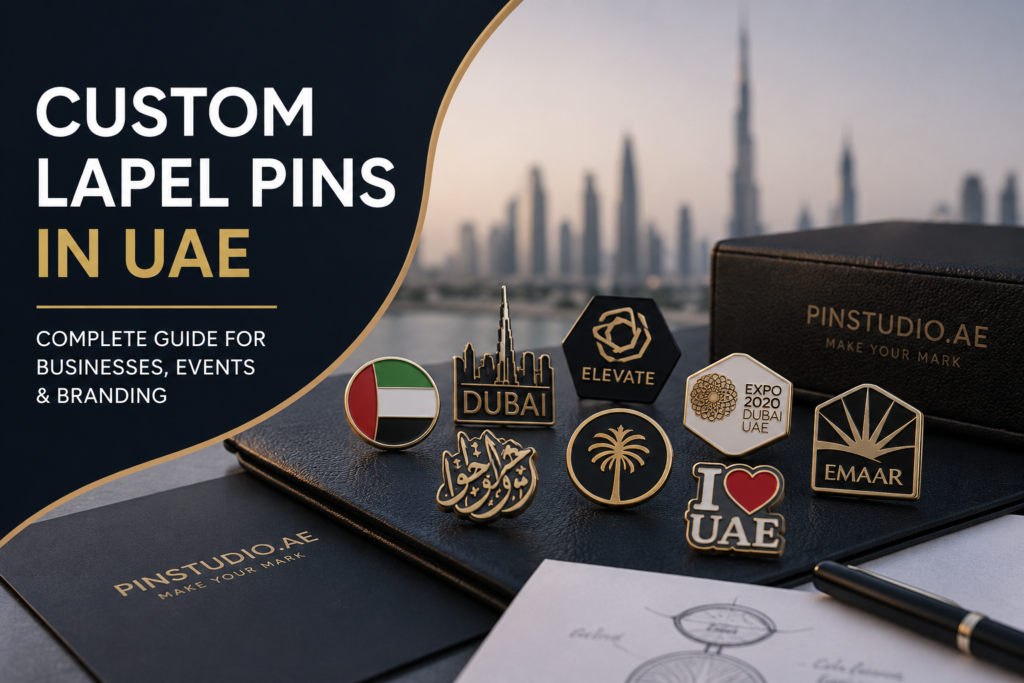
Custom lapel pins in the UAE have become a powerful branding tool for businesses, schools, organizations, and event planners who want a simple but highly effective way to create identity and recognition. Whether used at corporate events in Dubai, exhibitions in Abu Dhabi, or promotional campaigns across the UAE, these small accessories carry strong branding value.
In this complete guide, we will explain everything about custom lapel pins, including types, materials, manufacturing process, design principles, and how businesses can use them for marketing and brand growth. This guide is designed to help you make informed decisions while also improving your understanding of how professional pin manufacturing works at Pinstudio.ae.
What Are Custom Lapel Pins?
Custom lapel pins are small metal accessories designed to represent a brand, message, or identity. They are usually attached to clothing, bags, or uniforms and are widely used for branding and recognition purposes.
Unlike regular printed badges, lapel pins are durable, visually premium, and customizable in detail. Businesses in the UAE prefer them because they create long-lasting brand visibility in a cost-effective way.
From corporate logos to creative designs, lapel pins transform simple ideas into physical branding tools that people can wear and remember.
Why Custom Lapel Pins Are Popular in the UAE
The UAE has a highly competitive business environment, especially in industries like real estate, hospitality, events, education, and retail. In such markets, branding plays a major role in customer trust and recognition.
Custom lapel pins are widely used because they offer a professional yet affordable branding solution. Companies use them during exhibitions, product launches, and conferences where first impressions matter.
Another key reason is versatility. A single pin design can be used across employees, customers, and promotional campaigns without changing the core branding message. This consistency helps businesses strengthen their identity over time.
Types of Custom Lapel Pins
Understanding different types of lapel pins is important because each type serves a different purpose depending on budget, design complexity, and branding goals.
Soft enamel pins are the most commonly used option. They have a textured surface where metal lines remain raised and colored areas are slightly recessed. This creates a vibrant and detailed look that works well for modern branding and promotional campaigns.
Hard enamel pins, on the other hand, are polished until the surface becomes completely smooth. They are more premium and are often used for corporate gifts, executive branding, or luxury events where appearance quality is very important.
There are also die-struck metal pins, which do not use enamel colors. Instead, they focus on metal finishes like gold, silver, or antique styles. These are often used by government organizations or formal institutions that prefer a minimal yet elegant look.
Printed pins are another category designed for complex artwork or gradient designs. They are useful when a logo has detailed elements that cannot be achieved through enamel filling.
Each type has its own purpose, and choosing the right one depends on your branding goals and target audience.
Materials Used in Custom Pin Manufacturing
Material selection plays a major role in determining the quality, durability, and overall appearance of a lapel pin.
Zinc alloy is one of the most popular materials because it allows detailed designs and works well for both soft and hard enamel pins. It is flexible in manufacturing and widely used for business branding products.
Iron is another commonly used material, especially for cost-effective promotional pins. While it is less premium compared to zinc alloy, it is suitable for bulk orders and simple designs.
Brass is preferred for high-end pins because it provides excellent durability and a polished finish. Many premium brands choose brass when they want a luxury feel in their promotional products.
Copper is used for collectible or high-detail pins where precision and aesthetics are a priority.
The material choice directly impacts both cost and final quality, so businesses should select based on their branding goals rather than only price.
How Custom Lapel Pins Are Made
The manufacturing process of lapel pins involves multiple technical steps that ensure quality and consistency.
It starts with artwork preparation, where your logo or design is converted into a production-ready format. This stage is crucial because even small design errors can affect the final output.
After approval, a metal mold is created. This mold acts as the base for stamping the design into metal sheets.
Once the mold is ready, the stamping process begins. High pressure is used to imprint the design into the selected metal material, forming the structure of the pin.
After stamping, enamel coloring is added where required. This step gives life to the design by filling color into specific sections of the pin.
Next comes polishing and finishing, where excess material is removed, and the surface is refined. Depending on the selected style, plating such as gold, silver, or antique finish is applied.
Finally, attachments like butterfly clutches or magnetic backs are installed, and each pin is inspected for quality before packaging.
Understanding this process helps businesses appreciate the level of detail involved in professional pin manufacturing, especially when working with experienced manufacturers like Pinstudio.ae.
How to Design a Professional Custom Lapel Pin
A successful lapel pin design is not just about creativity; it is also about clarity, simplicity, and production feasibility.
The best designs are usually simple but impactful. Overly complex artwork can lose clarity when reduced to a small size, which is why professional designers focus on bold shapes and clean outlines.
Color selection is also important. High contrast between background and foreground helps improve visibility and makes the pin more attractive when worn.
Typography should always be readable. Small or overly decorative fonts can become unclear after production, especially on smaller pins.
Size selection plays a role as well. Most effective lapel pins range between one to two inches, depending on design complexity and usage purpose.
Businesses should also ensure that their design aligns with brand identity. A consistent visual language across marketing materials and pins strengthens brand recognition over time.
Best Uses of Custom Lapel Pins for Businesses
Custom lapel pins are widely used across different industries in the UAE because they are versatile and cost-effective.
In corporate environments, companies use pins for branding during meetings, conferences, and employee uniforms. This helps create a unified professional appearance.
In marketing campaigns, lapel pins are often used as promotional giveaways. Customers tend to keep them longer than paper-based materials, which increases brand exposure.
Educational institutions use custom pins for student recognition, team identity, and school events. This builds a sense of belonging among students and staff.
In the hospitality industry, hotels and restaurants use pins to represent staff roles or brand identity, improving customer trust and service experience.
Event organizers also rely heavily on lapel pins during exhibitions and trade shows where branding visibility is essential.
Common Mistakes to Avoid When Ordering Custom Pins
Many businesses make mistakes that affect the final result of their pin orders.
One common issue is using overly complex designs that do not scale well. Another mistake is choosing the wrong material for the intended purpose, which can affect durability and appearance.
Some businesses also ignore sample approval stages, which can lead to unexpected results in bulk production.
Working with an experienced manufacturer helps avoid these issues and ensures a smoother production process from design to delivery.
Why Custom Pins Are a Strong Branding Tool
Custom lapel pins are not just accessories; they are long-term branding assets. Unlike digital ads or temporary marketing materials, pins physically stay with the audience for a long time.
When worn in public, they act as continuous brand exposure tools. This makes them especially valuable for businesses focusing on awareness and identity building.
They also create emotional value, especially in employee recognition or event participation, which strengthens brand loyalty over time.
Final Thoughts
Custom lapel pins in the UAE are an effective combination of affordability, creativity, and long-term branding impact. Whether used for corporate identity, marketing campaigns, or event promotions, they offer a professional way to make your brand visible and memorable.
If you are planning to create high-quality custom pins with professional finishing and detailed customization, working with an experienced manufacturer like Pinstudio.ae ensures better results, consistency, and brand alignment.
With the right design, material, and strategy, custom lapel pins can become one of the strongest branding tools for your business in the UAE market.
Frequently Asked Questions (FAQ)
Custom lapel pins are mainly used for branding, corporate identity, employee recognition, events, and promotional campaigns. Businesses in the UAE also use them during exhibitions, product launches, and marketing giveaways to increase brand visibility in a professional way.
Soft enamel pins have raised metal lines with slightly recessed color areas, giving them a textured look. Hard enamel pins are polished flat, creating a smooth and premium finish. Soft enamel is more affordable and commonly used for promotions, while hard enamel is preferred for high-end branding and corporate gifts.
Production time usually depends on design complexity and order quantity. On average, it takes around 7 to 15 working days after design approval. Bulk or highly detailed orders may take slightly longer, especially if multiple finishing options are involved.
Minimum order quantity varies depending on the manufacturer and design type. Many suppliers offer low MOQs for startups or small businesses, while bulk orders are more cost-effective for large corporate campaigns and events.