

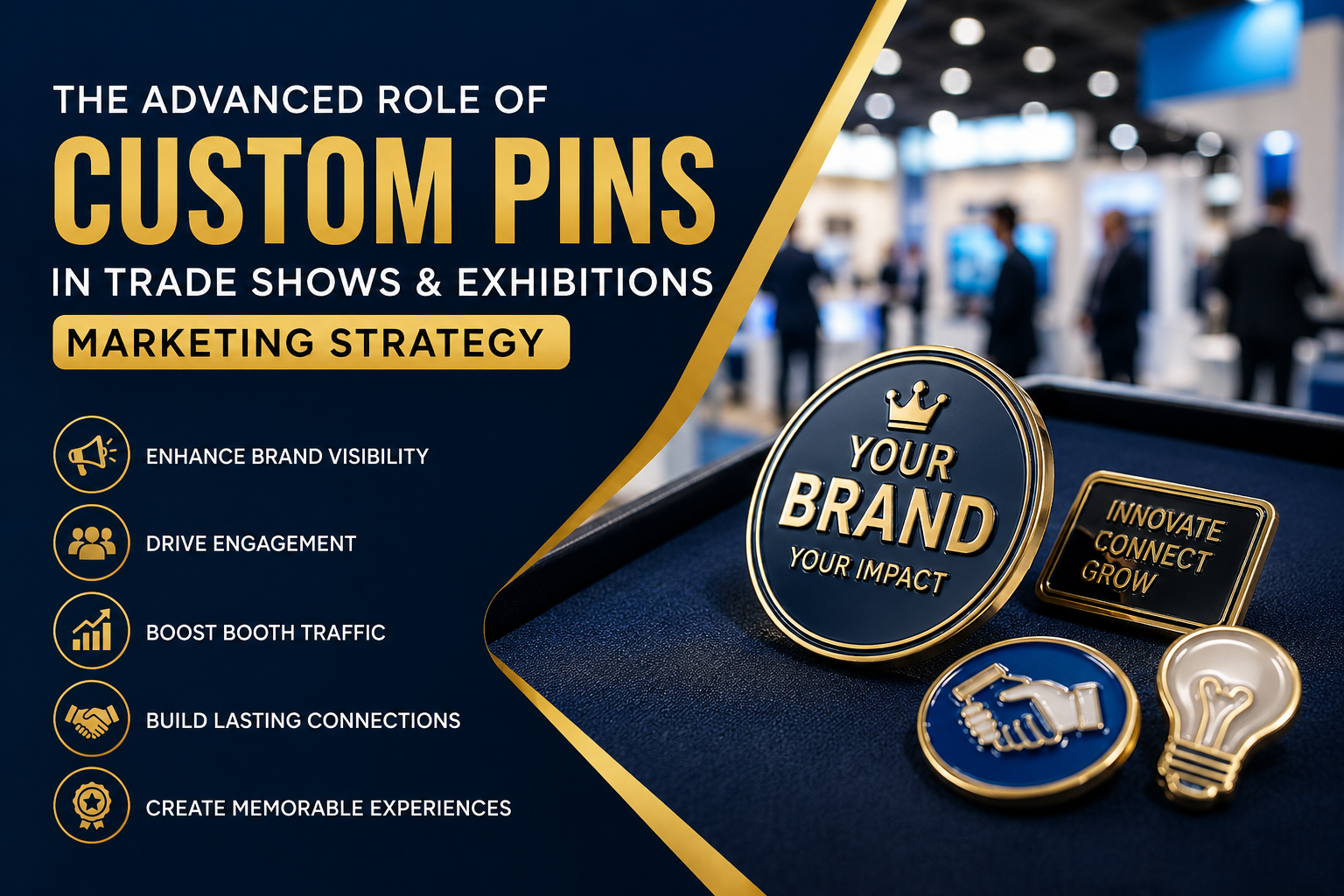
In modern exhibition marketing, custom pins for trade shows & exhibitions are no longer just decorative items. They have evolved into strategic branding tools that influence how people perceive, remember, and engage with a brand during and after an event.
Businesses invest thousands of dollars in booths, banners, digital screens, and promotional campaigns, yet many still struggle to create a lasting impression. The reason is simple: most marketing materials are passive. Custom pins, however, are interactive, wearable, and socially shareable, which makes them significantly more powerful in real-world marketing environments.
To understand their full potential, we need to go deeper into how they actually function within human psychology, event marketing behavior, and brand positioning strategy.
> Custom Lapel Pins in UAE: Complete Guide for Businesses, Events & Branding
> 3D Lapel Pin Artwork Secrets Every Designer Needs
Why Custom Pins Work in Real Trade Show Environments
At a trade show, attention is the most valuable currency. Every visitor is constantly exposed to competing stimuli — lights, conversations, displays, and promotional pitches. In this environment, the brain naturally filters out repetitive or low-value information.
Custom pins succeed because they bypass this “attention fatigue” problem. Instead of competing for attention like banners or screens, they are physically attached to a person or offered as a collectible item. This creates a sense of personal value.
When a visitor receives a well-designed pin, they are more likely to keep it rather than discard it. This small behavioral difference is what makes pins powerful branding assets. Over time, the repeated visibility of that pin reinforces brand memory in a subtle but effective way.
Unlike digital ads that disappear after a few seconds, pins remain visible for weeks, months, or even years depending on how often they are worn or displayed.
Psychological Impact of Custom Pins on Brand Memory
One of the most overlooked aspects of custom pins for trade shows & exhibitions is their psychological influence on memory retention.
Human memory is strongly influenced by physical interaction. When a person touches, wears, or collects an item, the brain encodes it more deeply compared to visual-only exposure. This is known as “embodied cognition,” where physical interaction strengthens cognitive recall.
Custom pins take advantage of this principle. A visitor who receives a pin is not just seeing a brand—they are physically interacting with it. This creates a stronger emotional and cognitive connection.
Additionally, pins often act as identity markers. People tend to wear items that reflect their interests, experiences, or affiliations. When your brand becomes part of that identity, even temporarily, it achieves a higher level of recall than traditional advertising methods.
How Trade Show Behavior Makes Pins More Powerful
Trade shows are unique environments where human behavior is different from normal retail or online browsing.
Visitors are actively exploring, networking, and collecting information. This makes them more open to small interactive experiences. A custom pin fits perfectly into this behavioral pattern because it feels like a reward rather than an advertisement.
When booths offer pins in exchange for participation, such as scanning a QR code, attending a demo, or engaging in a conversation, it creates a micro-exchange of value. The visitor feels rewarded, and the brand gains meaningful engagement.
This interaction is far more valuable than passive flyer distribution because it creates a two-way connection instead of a one-way message.
Design Strategy Behind High-Performing Custom Pins
Not all pins generate the same marketing impact. The design plays a critical role in determining whether a pin will be kept, worn, or ignored.
Successful trade show pins usually follow three key principles:
First, simplicity. A clean and recognizable design ensures that the brand is visible even at small sizes. Overly complex designs often lose clarity when converted into pin format.
Second, emotional relevance. Pins that represent achievement, membership, or exclusivity tend to perform better. For example, limited-edition pins given only at specific events create a sense of scarcity, increasing their perceived value.
Third, color psychology. Bright, contrasting colors are more likely to attract attention in crowded environments. However, the color choice should still align with brand identity to maintain consistency.
These design factors collectively determine whether a pin becomes a promotional tool or simply a forgotten item.
Role of Custom Pins in Networking and Social Interaction
One of the strongest advantages of custom pins for trade shows & exhibitions is their ability to facilitate networking.
In many events, professionals use pins as conversation starters. A unique pin design often triggers curiosity, leading to natural interactions between strangers. This is particularly useful for brands that rely heavily on relationship-based sales or B2B marketing.
Pins can also act as identifiers for different roles within a company. For example, staff, managers, or product specialists can wear different pin designs. This helps visitors easily identify the right person to speak with, improving the overall customer experience at the booth.
In this way, pins are not just marketing tools—they are functional communication assets within the event ecosystem.
Delivering Exceptional Return on Investment (ROI)
Compared to many promotional products, custom pins offer an excellent balance between affordability and effectiveness.
ROI Factors:
| Factor | Benefit |
|---|---|
| Low Production Cost | Suitable for large-scale distribution |
| High Retention Rate | Long-term brand exposure |
| Easy Transportation | Minimal shipping expenses |
| Collectible Value | Increased engagement |
| Versatile Usage | Suitable for multiple campaigns |
Their durability ensures that marketing impact continues long after the exhibition ends.
Long-Term Branding Value Beyond the Exhibition
The impact of custom pins does not end when the trade show is over. In fact, their long-term value is where they become even more powerful.
Unlike brochures or digital ads that disappear after the event, pins continue to circulate in everyday life. A visitor might wear the pin on a bag, jacket, or display board, unintentionally promoting your brand in different environments such as offices, universities, or social gatherings.
This creates a form of passive marketing that continues without additional cost. Over time, this repeated exposure builds familiarity, which is one of the strongest drivers of trust in branding.
>custom baseball pins for sports branding and teams
>offset pins for detailed branding designs
Strategic Use of Pins in Multi-Event Campaigns
Brands that participate in multiple trade shows throughout the year can use custom pins as part of a larger campaign strategy rather than isolated giveaways.
For example, different events can feature different pin designs, each representing a stage of a campaign or product launch. Collectors and returning visitors may try to collect all versions, increasing engagement across multiple events.
This approach transforms pins into a series-based branding system, similar to collectible items. It encourages repeat interaction and strengthens long-term brand recall across multiple touchpoints.
Why Businesses Should Prioritize Pins in Event Marketing Budgets
Most companies allocate the majority of their trade show budget to booth design, advertising, and staff training. However, small promotional tools like pins often deliver disproportionately high returns in terms of engagement and recall.
This is because pins operate at both emotional and behavioral levels. They are inexpensive to produce but highly effective in creating visibility, interaction, and long-term branding effects.
When combined with a strong booth strategy, custom pins can significantly increase the effectiveness of an entire exhibition campaign without requiring large additional investment.
Final Insight
The true strength of custom pins for trade shows & exhibitions lies in their simplicity. They do not rely on technology, screens, or complex systems. Instead, they leverage human psychology, physical interaction, and social behavior to create meaningful brand connections.
When used strategically, they become more than just promotional items—they become branding instruments that extend your presence far beyond the exhibition floor.
FAQs
Custom pins are used as promotional branding tools to attract attention, engage visitors, and increase brand recall during trade shows and exhibitions. They help businesses stand out in crowded event environments.
Custom pins are effective because they are wearable, collectible, and visually appealing. Unlike flyers or brochures, they are kept longer, which increases long-term brand visibility and recognition.
Offset pins are ideal for detailed and corporate designs, enamel pins are best for premium branding, and PVC pins work well for creative and colorful promotional campaigns.
Custom pins encourage interaction at booths by acting as giveaways or rewards. This motivates visitors to engage with your brand, increasing conversations and lead generation.
Yes, custom pins are highly cost-effective. They are inexpensive to produce in bulk but provide long-term marketing value through repeated exposure and brand visibility.