
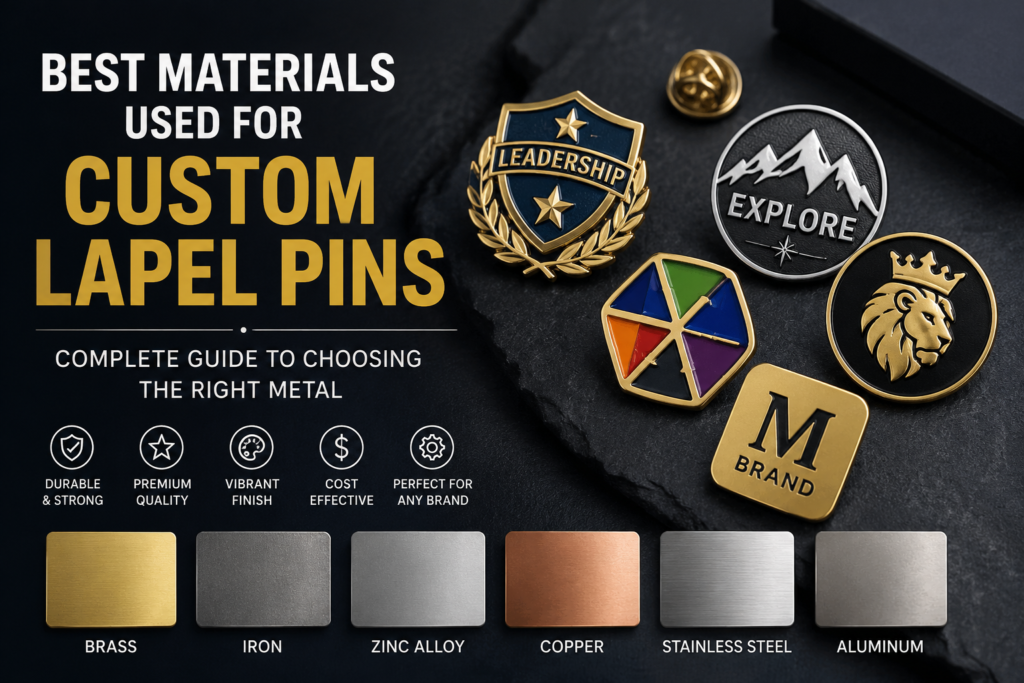
Custom lapel pins have become one of the most effective promotional products for businesses, schools, sports clubs, government organizations, and event organizers. Whether you want to strengthen brand awareness, reward employees, promote an event, or create collectible merchandise, choosing the right material is one of the most important decisions in the pin manufacturing process.
The material used in a custom lapel pin directly affects its appearance, durability, weight, finish quality, production cost, and overall value. While many buyers focus on design and color, understanding the different materials available can help you make a smarter purchasing decision and ensure your pins achieve the desired impact.
This guide explains the best materials used for custom lapel pins, their advantages, limitations, and the ideal applications for each option.
Why Material Choice Matters for Custom Lapel Pins
The quality of a lapel pin begins with its base material. Different metals offer varying levels of strength, detail reproduction, plating compatibility, and durability.
A premium material can create a luxury appearance that enhances your brand image, while a cost-effective material may be better suited for large-scale promotional campaigns.
Choosing the right material helps ensure:
- Better durability
- Enhanced visual appeal
- Improved color application
- Stronger brand perception
- Better value for investment
Understanding these factors can prevent costly mistakes and help you order pins that align perfectly with your goals.
Brass Pins: The Premium Standard for Professional Designs
Brass is widely considered one of the best materials for manufacturing high-quality custom lapel pins. It has been used for decades due to its excellent durability, smooth finish, and ability to capture intricate design details.
Brass is especially popular for soft enamel and hard enamel lapel pins because it offers a smooth surface that allows colors and plating to appear vibrant and professional.
The material resists corrosion effectively and maintains its appearance over time, making it suitable for premium corporate pins, recognition awards, and executive gifts.
Organizations seeking a luxurious look often choose brass because it supports various plating finishes, including gold, silver, black nickel, antique brass, and rose gold.
Although brass generally costs more than iron, its superior finish and longevity often justify the investment.
>Metal Pins vs PVC Pins: Which One Should You Choose for Your Brand?
>Custom School Badge Pins in UAE: A Complete Guide to Designs, Uses & Benefits
Best Materials Used for Custom Lapel Pins: Iron Pins
Iron is one of the most affordable materials used in custom lapel pin production. It provides excellent value for organizations ordering large quantities while maintaining good durability and appearance.
Iron is commonly used for promotional campaigns, event giveaways, awareness programs, and school pins.
Modern manufacturing processes allow iron pins to achieve attractive finishes and detailed designs at a lower production cost compared to brass.
Many businesses choose iron when they need high-quality custom pins within a limited budget.
While iron may not achieve the same premium finish as brass, it remains one of the most practical choices for bulk orders.
Its affordability makes it ideal for organizations seeking maximum visibility without exceeding marketing budgets.
Zinc Alloy Pins: Ideal for Custom Shapes and 3D Designs
Zinc alloy has become increasingly popular in the custom lapel pin industry due to its flexibility and versatility.
Unlike traditional stamped metals, zinc alloy is produced through a casting process that allows manufacturers to create highly detailed three-dimensional designs, cutouts, and unique shapes.
This material is particularly suitable for custom-shaped pins, intricate logos, mascot designs, and collectible merchandise.
Because zinc alloy can be molded into complex forms, designers enjoy greater creative freedom compared to traditional metal stamping methods.
The material also supports a wide variety of finishes and color applications.
For brands looking to create eye-catching promotional products that stand out from standard lapel pins, zinc alloy often provides the best solution.
Best Materials Used for Custom Lapel Pins: Stainless Steel Pins
Stainless steel offers a sleek and contemporary appearance that appeals to modern brands and organizations.
Known for its exceptional resistance to corrosion, scratches, and wear, stainless steel is frequently used for professional corporate pins and long-lasting identification badges.
Its clean appearance makes it particularly suitable for minimalist designs and modern branding.
Businesses operating in harsh environments often prefer stainless steel because it maintains its appearance even with frequent use.
Although it may not be as common as brass or zinc alloy, stainless steel remains an excellent choice for organizations prioritizing durability and longevity.
Best Materials Used for Custom Lapel Pins: Copper Pins
Copper is another premium material used for high-quality lapel pins. It provides exceptional detail reproduction and supports luxurious plating finishes.
Many manufacturers prefer copper for hard enamel pins because its smooth surface helps create a polished, jewelry-like appearance.
Copper’s natural strength and workability allow for precise detailing, making it suitable for corporate recognition programs, military pins, and commemorative products.
Although copper is generally more expensive than iron, it delivers superior aesthetics that can elevate the perceived value of the finished product.
Organizations seeking an upscale appearance often consider copper a worthwhile investment.
Aluminum Pins: Lightweight and Budget-Friendly Alternatives
Aluminum is a lightweight alternative for custom lapel pin production. It is commonly selected when weight reduction is a priority.
Because aluminum is lighter than brass, iron, and zinc alloy, it can improve wearing comfort, particularly for larger pins.
The material is also resistant to rust and can be produced in various finishes.
While aluminum may not provide the same premium feel as heavier metals, it remains a practical option for promotional campaigns and casual applications.
Businesses looking for lightweight custom merchandise often find aluminum to be a suitable choice.
Comparing Popular Metals Used in Lapel Pin Manufacturing
When selecting a material, it is important to consider the specific goals of your project.
Brass offers the best balance of durability and premium appearance.
Iron provides affordability and excellent value for bulk orders.
Zinc alloy enables highly detailed and creative designs.
Copper delivers luxury aesthetics and superior detail.
Stainless steel offers exceptional durability and a modern appearance.
Aluminum provides lightweight functionality at an economical price point.
Each material serves a unique purpose, making it essential to evaluate your budget, branding objectives, and design requirements before placing an order.
How to Select the Right Material for Your Brand
For corporate branding, brass and copper are often considered the best options due to their premium appearance and long-lasting quality.
A professionally crafted brass lapel pin can create a positive impression during conferences, trade shows, networking events, and employee recognition programs.
Businesses that prioritize prestige and professionalism typically prefer these materials because they reflect quality and attention to detail.
Meanwhile, organizations running large-scale promotional campaigns may benefit from iron pins due to their lower production costs.
The ideal choice ultimately depends on your marketing goals and budget.
How Material Affects Lapel Pin Finishes
The base material significantly influences the final finish of a custom lapel pin.
Premium materials such as brass and copper typically achieve smoother plating and more refined details.
Popular finishing options include:
Gold plating creates a luxurious and prestigious appearance.
Silver plating offers a clean and professional look.
Black nickel delivers a modern and sophisticated style.
Antique finishes provide a vintage and collectible aesthetic.
Rose gold adds elegance and contemporary appeal.
Selecting the right material ensures the chosen finish achieves maximum visual impact.
Choosing the Right Material for Your Custom Lapel Pins
Before placing an order, consider several important factors.
Think about where the pins will be used, how frequently they will be worn, and the impression you want to create.
If premium branding is your primary objective, brass or copper may be the best choice.
If affordability is the main concern, iron offers excellent value.
For highly detailed or custom-shaped designs, zinc alloy often delivers superior results.
Understanding these differences allows buyers to maximize both quality and return on investment.
Conclusion
The best materials used for custom lapel pins vary depending on your design requirements, branding goals, and budget. Brass remains the preferred choice for premium-quality pins, while iron offers affordability for bulk orders. Zinc alloy provides unmatched design flexibility, stainless steel delivers exceptional durability, and copper creates a luxurious appearance.
Choosing the right material ensures your custom lapel pins not only look professional but also represent your brand effectively for years to come. By understanding the strengths of each material, businesses can make informed decisions and create promotional products that leave a lasting impression.
FAQs
Brass is generally considered the best material because it offers excellent durability, premium appearance, and outstanding detail reproduction.
Brass lapel pins provide a higher-end finish and longer lifespan, while iron pins are more affordable and suitable for bulk orders.
Zinc alloy is the preferred material for 3D and highly detailed custom lapel pin designs due to its casting capabilities.
Copper and brass are commonly used for hard enamel pins because they provide a smooth surface and premium finish.